
Toyota Research Institute



Hello! I’m a robotics researcher at Toyota Research Institute (TRI) with interests spanning machine learning, robot control, and extended reality (XR) headsets. At the intersection of these interests is my overarching goal of establishing effective human-robot interactions where people live and work.
My recent work has focused on improving robot foundation models, such as vision-language-action (VLA) models. Through the Large Behavior Models project and TRI’s collaboration with Boston Dynamics to deploy these models on the eAtlas humanoid, I have contributed across the full stack, from data collection and curation to policy training, evaluation, and deployment in simulation and on hardware. I am especially interested in interactive imitation learning as a means of enabling VLA models to collaborate with people in personalized and customizable ways.
Prior to joining TRI, I was a research scientist in robotics at Northeastern University, serving as a research lead on NSF and DARPA projects. I hold a PhD in Electrical & Electronic Engineering from Imperial College London, where my research focused on augmented reality headset interfaces, shared control for robot teleoperation, and learning-based methods for estimating human intent.
Email: markzolotas@gmail.com
Latest News
- July 2026: Three co-authored TRI papers were accepted and presented at RSS 2026, two of which are from collaborations with the EmPRISE Lab at Cornell University
- “A Systematic Study of Data Modalities and Strategies for Co-training Large Behavior Models for Robot Manipulation”
- “TACTIC: Tactile and Vision Conditioned Contact Centric Control for Whole-Arm Manipulation”
- “RAG-Diff: Adapting Diffusion Policies to Dynamic Constraints with Retrieval-Augmented Guidance”
- June 2026: A TRI-Cornell collaboration led to the “Impact of Different Failures on a Robot’s Perceived Reliability” paper being presented at ICRA 2026
- May 2026: Our paper on “Chance-Constrained Convex MPC for Robust Quadruped Locomotion Under Parametric and Additive Uncertainties” was published in IEEE RA-L and nominated as a Finalist for the IEEE-RAS Model-Based Optimization for Robotics 2025 Best Paper Award
- April 2026: TRI’s empirical study on Large Behavior Models was published on the cover page of Science Robotics
- August 2025: Check out this blog post on “Large Behavior Models and Atlas Find New Footing”, which is a product of the collaboration between TRI and Boston Dynamics that I have been fortunate to work on!
- May 2025: Our paper on “Data-Driven Sampling Based Stochastic MPC for Skid-Steer Mobile Robot Navigation” was presented at ICRA 2025
- Jan & April 2025: Two robotics software articles on “robot_collision_checking: A Lightweight ROS 2 Interface to FCL (Flexible Collision Library)” and “constrained_manipulability: A ROS 2 library to Compute and Visualize Constrained Capacities for Robotic Manipulators” were published in the Journal of Open Source Software (JOSS)
- October 2024: “User-customizable Shared Control for Robot Teleoperation via Virtual Reality” was presented at IROS 2024
- June 2024: Joined TRI as a Research Scientist!
- May 2024: Our paper on “A Probabilistic Motion Model for Skid-Steer Wheeled Mobile Robot Navigation on Off-Road Terrains” was presented at ICRA 2024
- March 2024: “Imposing Motion Variability for Ergonomic Human-Robot Collaboration” was accepted for publication in the IISE Transactions on Occupational Ergonomics and Human Factors
- October 2022: Introduced a novel representation learning framework on “Disentangled Sequence Clustering for Human Intention Inference” at IROS 2022 in Kyoto
- September 2021: Supervised Northeastern University’s team to place 2nd in NASA’s 2020–2021 RASC-AL Moon to Mars Ice and Prospecting Challenge (story here)
- August 2021: Published a Frontiers in Robotics and AI article titled “Motion Polytopes in Virtual Reality for Shared Control in Remote Manipulation Applications”
- November 2020: Successfully defended my PhD thesis, titled “Explainable Shared Control in Assistive Robotics”
- April 2020: “Transparent Intent for Explainable Shared Control in Assistive Robotics” was accepted for publication in the Doctoral Consortium at IJCAI 2020
- November 2019: Presented the work, “Towards Explainable Shared Control using Augmented Reality”, at IROS 2019 in Macau, China
- September 2019: Honored to receive the Departmental Graduate Teaching Assistant of the Year award for my teaching duties within the Electrical & Electronic Engineering department at Imperial College London
- July 2019: Presented “instruMentor: An Interactive Robot for Musical Instrument Tutoring” at the Towards Autonomous Robotic Systems Conference in London, which was awarded the Institution of Engineering and Technology (IET) Prize for Innovation in Robotics
- October 2018: Presented our paper, “Head-Mounted Augmented Reality for Explainable Robotic Wheelchair Assistance”, at IROS 2018 in Madrid, Spain
- September 2016: Presented my Master’s dissertation, “Self-Organising Error Detection & Correction in Open Multi-Agent Systems”, at the International Conference on Self-Adaptive and Self-Organizing Systems in Augsburg, Germany
Recent Highlights
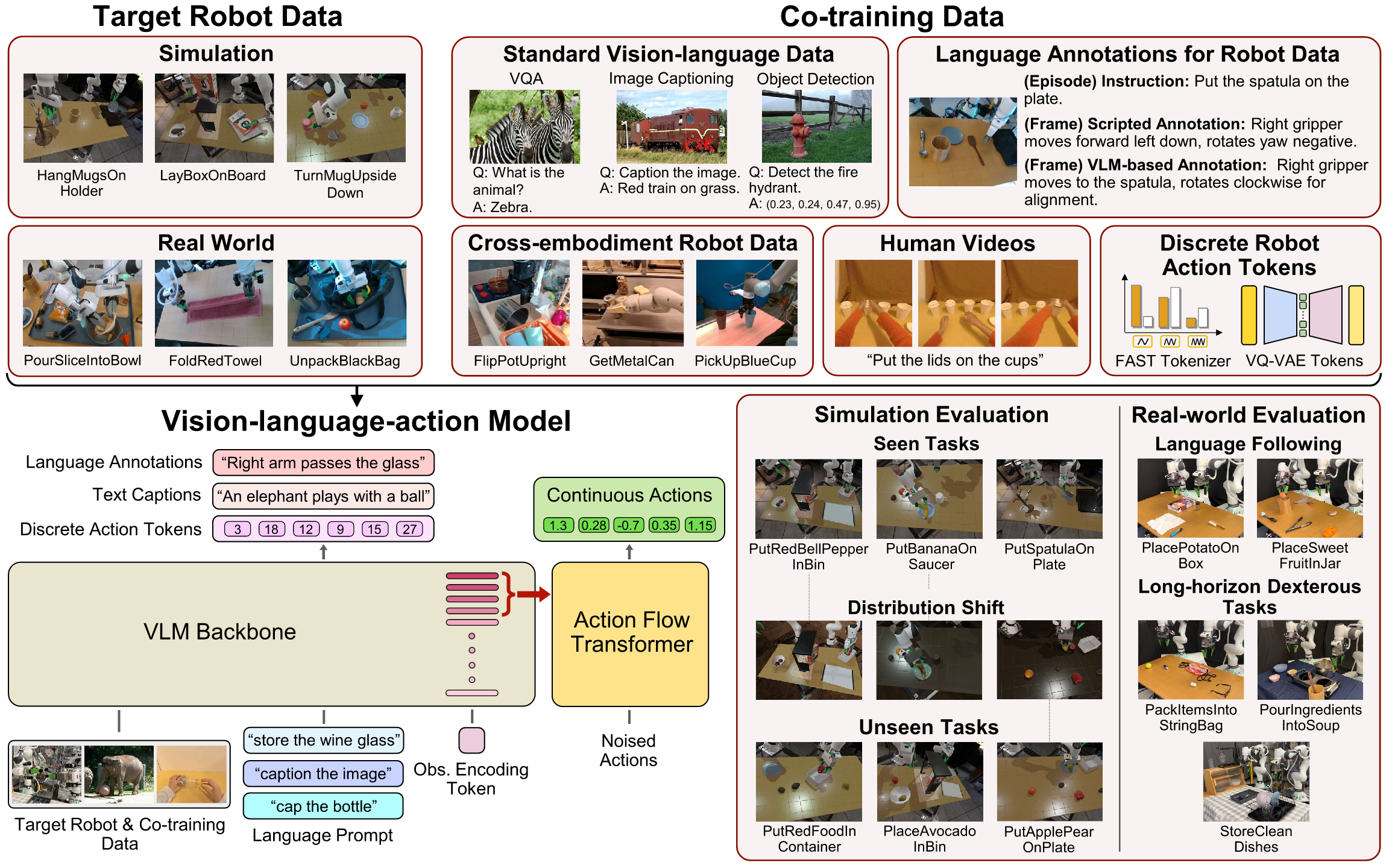
A Systematic Study of Data Modalities and Strategies for Co-training Large Behavior Models for Robot Manipulation
Fanqi Lin, Kushal Arora, Jean Mercat, Haruki Nishimura, Paarth Shah, Chen Xu, Mengchao Zhang, Mark Zolotas, Maya Angeles, Owen Pfannenstiehl, Andrew Beaulieu, Jose Barreiros
Robotics: Science and Systems (RSS), 2026
TL;DR: A large-scale study of co-training strategies for Large Behavior Models showing that vision-language and cross-embodiment robot data improve generalization, language following, and rapid adaptation, while discrete action tokens provide little benefit.
TACTIC: Tactile and Vision Conditioned Contact-Centric Control for Whole-Arm Manipulation
Rishabh Madan, Angchen Xie, Samantha Saak, Andres Blanco, Dohyeok Lee, Sarah Grace Brown, Yunting Yan, Mark Zolotas, Jose Barreiros, Tapomayukh Bhattacharjee
Robotics: Science and Systems (RSS), 2026
TL;DR: A contact-centric MPC framework that fuses RGBD, tactile, and proximity sensing with learned dynamics and analytical contact kinematics to plan task progress while regulating whole-arm interaction forces.
RAG-Diff: Adapting Diffusion Policies to Dynamic Constraints with Retrieval-Augmented Guidance
Ruolin Ye, Nayoung Ha, Shuaixing Chen, Qiandao Liu, Gavin Chen, Shaoyang Stassen, Mark Zolotas, Jose Barreiros, Tapomayukh Bhattacharjee
Robotics: Science and Systems (RSS), 2026
TL;DR: A runtime adaptation method for diffusion policies that retrieves relevant state-action examples and constraints from memory to guide denoising toward preference-consistent, constraint-satisfying behavior.
A Careful Examination of Large Behavior Models for Multitask Dexterous Manipulation
Large Behavior Models Team, TRI
Science Robotics (cover page), 2026
TL;DR: A rigorous evaluation of Large Behavior Models (LBMs) showing that multitask pre-training improves manipulation success and robustness, accelerates learning of new tasks, and scales predictably with pre-training data and diversity.
Large Behavior Models and Atlas Find New Footing
Boston Dynamics and TRI Research Team
2025
TL;DR: Language-conditioned policies for the eAtlas humanoid to perform long-horizon, whole-body manipulation tasks.