Please refer to my Google Scholar page for a complete list of academic publications.
Overview
My subject of interest is robotics and more specifically, the study of how humans and robots collaborate with one another. I approach this problem using concepts from machine learning, robot control, and extended reality (XR).
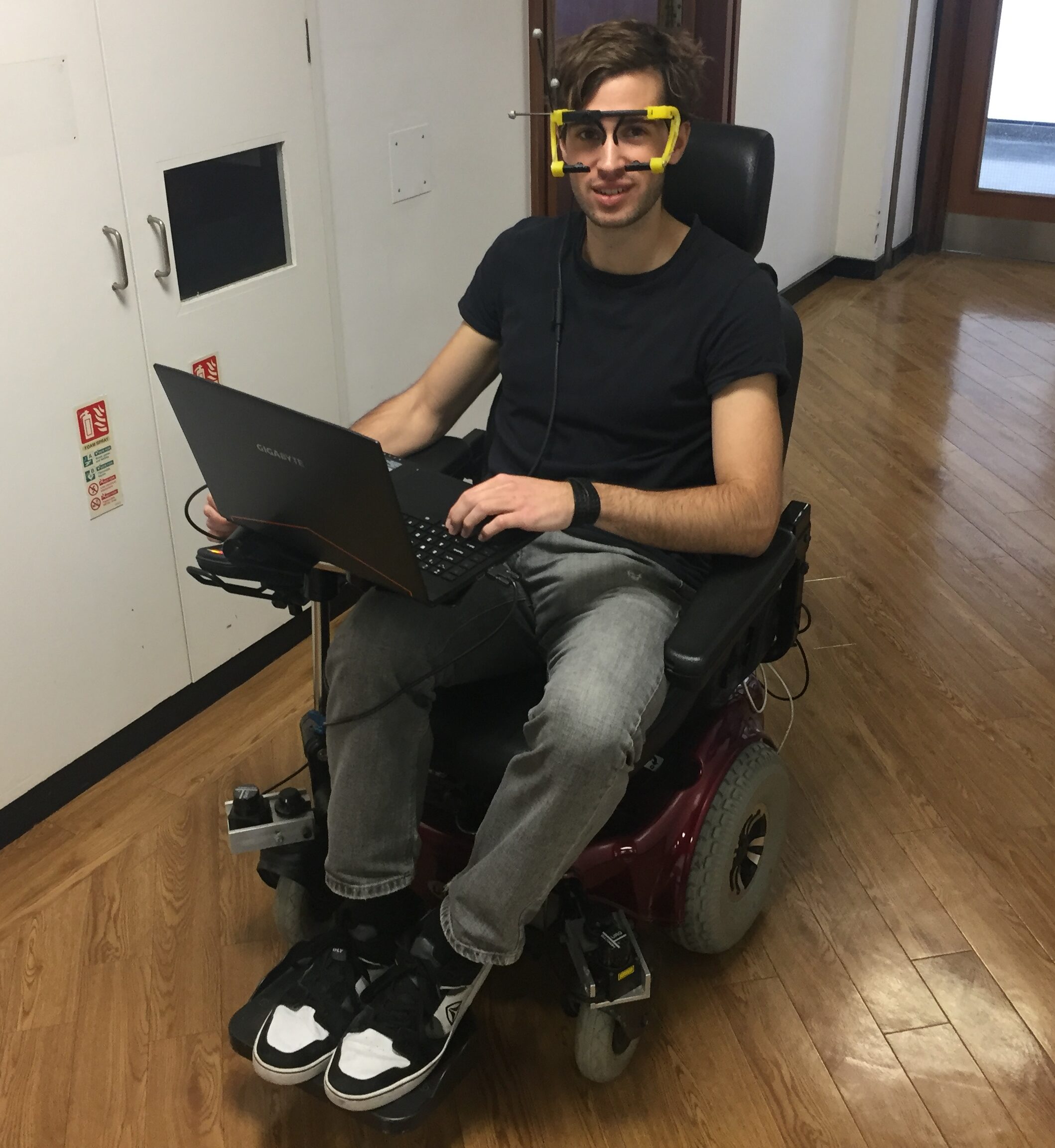
By studying these concepts, I aspire to develop robots that are capable of assisting people with their everyday tasks. A good example of this is the robotic wheelchair I worked on during my PhD.
Recently, my central focus has been on developing “human-centered” foundation models for robots, pursuing answers to research questions like:
- How can we collect/source data for robot learning that is uniquely social and collaborative? For example, by ingesting human-to-human data in the pre-training mix.
- How can we represent and leverage “features” of human data (e.g., intentions, needs, preferences) when training generative robot policies?
- How can we utilize passive multimodal observations of human behavior for in-context learning? Adapting policies to human feedback signals other than language, such as hand gestures, eye gaze, body posture, etc.
Selected Publications
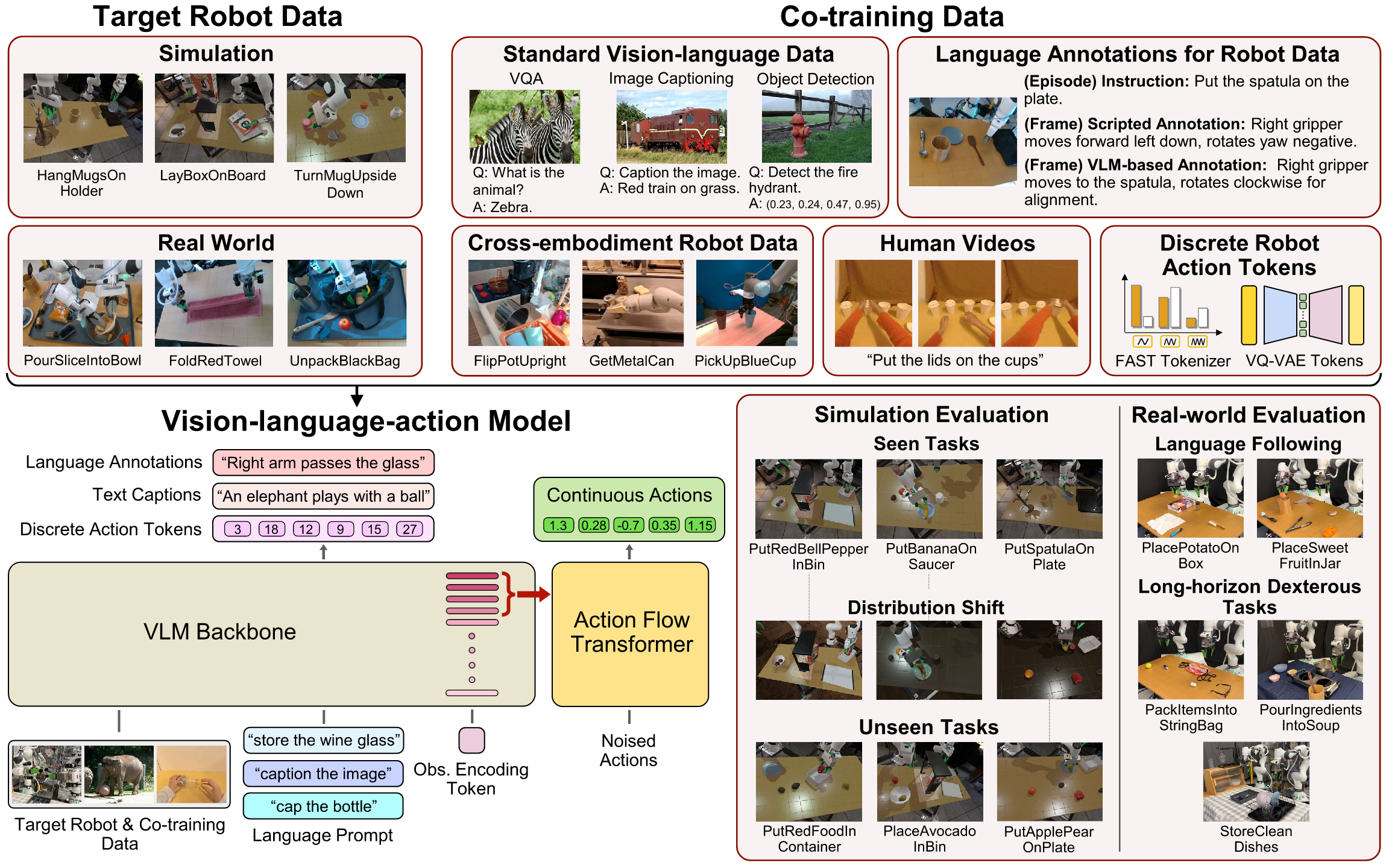
A Systematic Study of Data Modalities and Strategies for Co-training Large Behavior Models for Robot Manipulation
Fanqi Lin, Kushal Arora, Jean Mercat, Haruki Nishimura, Paarth Shah, Chen Xu, Mengchao Zhang, Mark Zolotas, Maya Angeles, Owen Pfannenstiehl, Andrew Beaulieu, Jose Barreiros
Robotics: Science and Systems (RSS), 2026
TL;DR: A large-scale study of co-training strategies for Large Behavior Models showing that vision-language and cross-embodiment robot data improve generalization, language following, and rapid adaptation, while discrete action tokens provide little benefit.
TACTIC: Tactile and Vision Conditioned Contact-Centric Control for Whole-Arm Manipulation
Rishabh Madan, Angchen Xie, Samantha Saak, Andres Blanco, Dohyeok Lee, Sarah Grace Brown, Yunting Yan, Mark Zolotas, Jose Barreiros, Tapomayukh Bhattacharjee
Robotics: Science and Systems (RSS), 2026
TL;DR: A contact-centric MPC framework that fuses RGBD, tactile, and proximity sensing with learned dynamics and analytical contact kinematics to plan task progress while regulating whole-arm interaction forces.
RAG-Diff: Adapting Diffusion Policies to Dynamic Constraints with Retrieval-Augmented Guidance
Ruolin Ye, Nayoung Ha, Shuaixing Chen, Qiandao Liu, Gavin Chen, Shaoyang Stassen, Mark Zolotas, Jose Barreiros, Tapomayukh Bhattacharjee
Robotics: Science and Systems (RSS), 2026
TL;DR: A runtime adaptation method for diffusion policies that retrieves relevant state-action examples and constraints from memory to guide denoising toward preference-consistent, constraint-satisfying behavior.
A Careful Examination of Large Behavior Models for Multitask Dexterous Manipulation
Large Behavior Models Team, TRI
Science Robotics (cover page), 2026
TL;DR: A rigorous evaluation of Large Behavior Models (LBMs) showing that multitask pre-training improves manipulation success and robustness, accelerates learning of new tasks, and scales predictably with pre-training data and diversity.
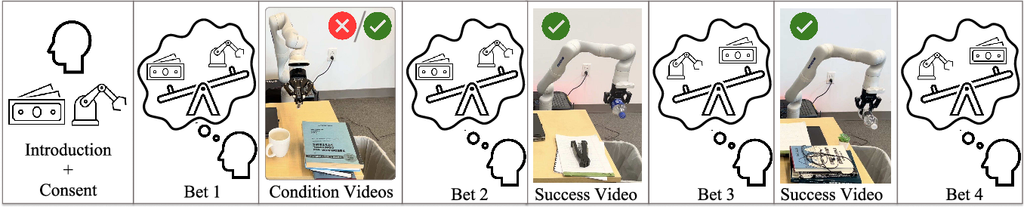
Impact of Different Failures on a Robot’s Perceived Reliability
Andrew Violette, Zhanxin Wu, Haruki Nishimura, Masha Itkina, Leticia Priebe Rocha, Mark Zolotas, Guy Hoffman, Hadas Kress-Gazit
International Conference on Robotics and Automation (ICRA), 2026
TL;DR: A study of which robot failures are in higher need of repair in human-robot interaction and how trust be recovered by robot successes.
Robot-Powered Data Flywheels: Deploying Robots in the Wild for Continual Data Collection and Foundation Model Adaptation
Jennifer Grannen, Michelle Pan, Kenneth Llontop, Cherie Ho, Mark Zolotas, Jeannette Bohg, Dorsa Sadigh
arXiv, 2025
TL;DR: A robot-powered data flywheel where deployed robots perform useful tasks while simultaneously collecting domain-representative data that improves both domain-specific adaptation and domain-adjacent generalization.
Large Behavior Models and Atlas Find New Footing
Boston Dynamics and TRI Research Team
2025
TL;DR: Language-conditioned policies for the eAtlas humanoid to perform long-horizon, whole-body manipulation tasks.
Chance-Constrained Convex MPC for Robust Quadruped Locomotion Under Parametric and Additive Uncertainties
Ananya Trivedi, Sarvesh Prajapati, Mark Zolotas, Michael Everett, Taşkın Padır
IEEE Robotics and Automation Letters (RA-L), 2025
Best Paper Award Finalist — IEEE RAS TC on Model-Based Optimization for Robotics
TL;DR: A chance-constrained MPC framework for quadrupeds that explicitly models payload and terrain uncertainty to ensure safe, robust locomotion.
Data-Driven Sampling-Based Stochastic MPC for Skid-Steer Mobile Robot Navigation
Ananya Trivedi, Sarvesh Prajapati, Anway Shirgaonkar, Mark Zolotas, Taşkın Padır
International Conference on Robotics and Automation (ICRA), 2025
TL;DR: A chance-constrained Model Predictive Path Integral (MPPI) controller that uses Gaussian Process Regression to model nonlinear terrain dynamics and uncertainty for skid-steer mobile robot navigation in outdoor environments.
User-customizable Shared Control for Robot Teleoperation via Virtual Reality
Rui Luo*, Mark Zolotas*, Drake Moore, Taşkın Padır
International Conference on Intelligent Robots and Systems (IROS), 2024
TL;DR: A user-customizable shared control framework that makes arbitration parameters directly editable in a VR headset interface, enabling operators to tailor autonomous assistance and improve precision and fluency over repeated trials of a teleoperation task — the buzz wire game.
A Probabilistic Motion Model for Skid-Steer Wheeled Mobile Robot Navigation on Off-Road Terrains
Ananya Trivedi, Mark Zolotas, Adeeb Abbas, Sarvesh Prajapati, Salah Bazzi, Taşkin Padır
International Conference on Robotics and Automation (ICRA), 2024
TL;DR: A data-driven dynamic model for skid-steer robots that uses Gaussian Process Regression to probabilistically model tire-terrain interactions, improving motion prediction and enabling uncertainty-aware planning across unseen terrains.
Imposing Motion Variability for Ergonomic Human-Robot Collaboration / Productive Inconvenience: Facilitating Posture Variability by Stimulating Robot-to-Human Handovers
Mark Zolotas, Rui Luo, Salah Bazzi, Dipanjan Saha, Katiso Mabulu, Kristian Kloeckl, Taşkın Padır
IISE Transactions on Occupational Ergonomics and Human Factors, 2024 /
International Conference on Robot and Human Interactive Communication, 2022
TL;DR: A stimulating cobot framework that varies robot behavior to engage human partner motion can improve human posture and ergonomics compared with overassistive policies that constrain movement.
Disentangled Sequence Clustering for Human Intention Inference
Mark Zolotas, Yiannis Demiris
International Conference on Intelligent Robots and Systems (IROS), 2022
TL;DR: A Disentangled Sequence Clustering Variational Autoencoder (DiSCVAE) framework that learns and clusters latent human intentions from sequential behavior in an unsupervised manner, allowing intent-aware robot assistance without task-specific intent labels.
Motion Polytopes in Virtual Reality for Shared Control in Remote Manipulation Applications
Mark Zolotas, Murphy Wonsick, Philip Long, Taşkın Padır
Frontiers in Robotics and AI, 2021
TL;DR: A VR-based shared control interface that visualizes end-effector manipulability polytopes to expose robot constraints and guide human-in-the-loop teleoperation, improving operator understanding of their available motion.
Towards Explainable Shared Control using Augmented Reality
Mark Zolotas, Yiannis Demiris
International Conference on Intelligent Robots and Systems (IROS), 2019
TL;DR: An Explainable Shared Control paradigm that combines autonomous assistance with augmented reality (AR) feedback to expose robot behavior, reducing human-robot model misalignment and improving recovery from adverse events.
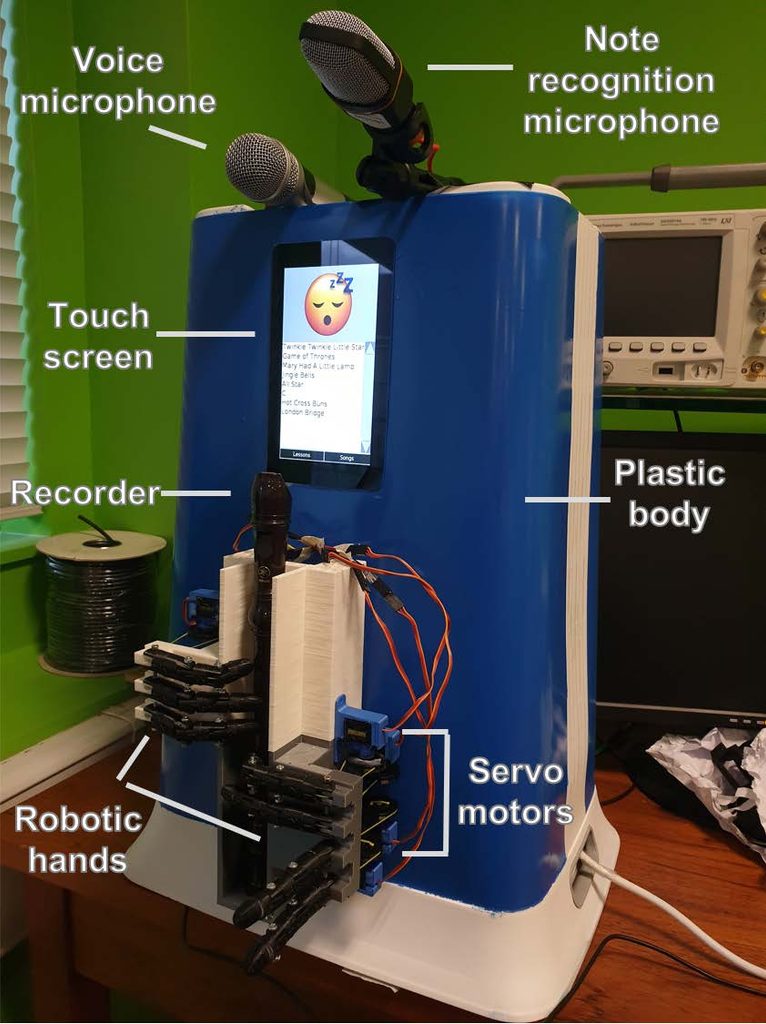
instruMentor: An Interactive Robot for Musical Instrument Tutoring
Shreyus Bagga, Benedikt Maurer, Tom Miller, Luke Quinlan, Lorenzo Silvestri, Dan Wells, Rebecka Winqvist, Mark Zolotas, Yiannis Demiris
Annual Conference Towards Autonomous Robotic Systems, 2019
IET Prize for Innovation in Robotics
TL;DR: A robotic music tutor for recorder education that combines robotic hands and multimodal interaction to demonstrate proper technique in real time, showing promise for personalized, accessible instrument learning.
Head-Mounted Augmented Reality for Explainable Robotic Wheelchair Assistance
Mark Zolotas, Yiannis Demiris
International Conference on Intelligent Robots and Systems (IROS), 2018
TL;DR: An augmented reality (AR) interface for shared-control wheelchairs that visualizes controller behavior and predicted states to help users build accurate mental models, with a pilot study examining effective and intuitive navigation cues.
A Systematic Study of Data Modalities and Strategies for Co-training Large Behavior Models for Robot Manipulation
Fanqi Lin, Kushal Arora, Jean Mercat, Haruki Nishimura, Paarth Shah, Chen Xu, Mengchao Zhang, Mark Zolotas, Maya Angeles, Owen Pfannenstiehl, Andrew Beaulieu, Jose Barreiros
Robotics: Science and Systems (RSS), 2026
TL;DR: A large-scale study of co-training strategies for Large Behavior Models showing that vision-language and cross-embodiment robot data improve generalization, language following, and rapid adaptation, while discrete action tokens provide little benefit.
RAG-Diff: Adapting Diffusion Policies to Dynamic Constraints with Retrieval-Augmented Guidance
Ruolin Ye, Nayoung Ha, Shuaixing Chen, Qiandao Liu, Gavin Chen, Shaoyang Stassen, Mark Zolotas, Jose Barreiros, Tapomayukh Bhattacharjee
Robotics: Science and Systems (RSS), 2026
TL;DR: A runtime adaptation method for diffusion policies that retrieves relevant state-action examples and constraints from memory to guide denoising toward preference-consistent, constraint-satisfying behavior.
A Careful Examination of Large Behavior Models for Multitask Dexterous Manipulation
Large Behavior Models Team, TRI
Science Robotics (cover page), 2026
TL;DR: A rigorous evaluation of Large Behavior Models (LBMs) showing that multitask pre-training improves manipulation success and robustness, accelerates learning of new tasks, and scales predictably with pre-training data and diversity.
Robot-Powered Data Flywheels: Deploying Robots in the Wild for Continual Data Collection and Foundation Model Adaptation
Jennifer Grannen, Michelle Pan, Kenneth Llontop, Cherie Ho, Mark Zolotas, Jeannette Bohg, Dorsa Sadigh
arXiv, 2025
TL;DR: A robot-powered data flywheel where deployed robots perform useful tasks while simultaneously collecting domain-representative data that improves both domain-specific adaptation and domain-adjacent generalization.
Large Behavior Models and Atlas Find New Footing
Boston Dynamics and TRI Research Team
2025
TL;DR: Language-conditioned policies for the eAtlas humanoid to perform long-horizon, whole-body manipulation tasks.
Disentangled Sequence Clustering for Human Intention Inference
Mark Zolotas, Yiannis Demiris
International Conference on Intelligent Robots and Systems (IROS), 2022
TL;DR: A Disentangled Sequence Clustering Variational Autoencoder (DiSCVAE) framework that learns and clusters latent human intentions from sequential behavior in an unsupervised manner, allowing intent-aware robot assistance without task-specific intent labels.
User-customizable Shared Control for Robot Teleoperation via Virtual Reality
Rui Luo*, Mark Zolotas*, Drake Moore, Taşkın Padır
International Conference on Intelligent Robots and Systems (IROS), 2024
TL;DR: A user-customizable shared control framework that makes arbitration parameters directly editable in a VR headset interface, enabling operators to tailor autonomous assistance and improve precision and fluency over repeated trials of a teleoperation task — the buzz wire game.
Motion Polytopes in Virtual Reality for Shared Control in Remote Manipulation Applications
Mark Zolotas, Murphy Wonsick, Philip Long, Taşkın Padır
Frontiers in Robotics and AI, 2021
TL;DR: A VR-based shared control interface that visualizes end-effector manipulability polytopes to expose robot constraints and guide human-in-the-loop teleoperation, improving operator understanding of their available motion.
User-customizable Shared Control for Robot Teleoperation via Virtual Reality
Rui Luo*, Mark Zolotas*, Drake Moore, Taşkın Padır
International Conference on Intelligent Robots and Systems (IROS), 2024
TL;DR: A user-customizable shared control framework that makes arbitration parameters directly editable in a VR headset interface, enabling operators to tailor autonomous assistance and improve precision and fluency over repeated trials of a teleoperation task — the buzz wire game.
Motion Polytopes in Virtual Reality for Shared Control in Remote Manipulation Applications
Mark Zolotas, Murphy Wonsick, Philip Long, Taşkın Padır
Frontiers in Robotics and AI, 2021
TL;DR: A VR-based shared control interface that visualizes end-effector manipulability polytopes to expose robot constraints and guide human-in-the-loop teleoperation, improving operator understanding of their available motion.
Towards Explainable Shared Control using Augmented Reality
Mark Zolotas, Yiannis Demiris
International Conference on Intelligent Robots and Systems (IROS), 2019
TL;DR: An Explainable Shared Control paradigm that combines autonomous assistance with augmented reality (AR) feedback to expose robot behavior, reducing human-robot model misalignment and improving recovery from adverse events.
Head-Mounted Augmented Reality for Explainable Robotic Wheelchair Assistance
Mark Zolotas, Yiannis Demiris
International Conference on Intelligent Robots and Systems (IROS), 2018
TL;DR: An augmented reality (AR) interface for shared-control wheelchairs that visualizes controller behavior and predicted states to help users build accurate mental models, with a pilot study examining effective and intuitive navigation cues.
TACTIC: Tactile and Vision Conditioned Contact-Centric Control for Whole-Arm Manipulation
Rishabh Madan, Angchen Xie, Samantha Saak, Andres Blanco, Dohyeok Lee, Sarah Grace Brown, Yunting Yan, Mark Zolotas, Jose Barreiros, Tapomayukh Bhattacharjee
Robotics: Science and Systems (RSS), 2026
TL;DR: A contact-centric MPC framework that fuses RGBD, tactile, and proximity sensing with learned dynamics and analytical contact kinematics to plan task progress while regulating whole-arm interaction forces.
RAG-Diff: Adapting Diffusion Policies to Dynamic Constraints with Retrieval-Augmented Guidance
Ruolin Ye, Nayoung Ha, Shuaixing Chen, Qiandao Liu, Gavin Chen, Shaoyang Stassen, Mark Zolotas, Jose Barreiros, Tapomayukh Bhattacharjee
Robotics: Science and Systems (RSS), 2026
TL;DR: A runtime adaptation method for diffusion policies that retrieves relevant state-action examples and constraints from memory to guide denoising toward preference-consistent, constraint-satisfying behavior.
Impact of Different Failures on a Robot’s Perceived Reliability
Andrew Violette, Zhanxin Wu, Haruki Nishimura, Masha Itkina, Leticia Priebe Rocha, Mark Zolotas, Guy Hoffman, Hadas Kress-Gazit
International Conference on Robotics and Automation (ICRA), 2026
TL;DR: A study of which robot failures are in higher need of repair in human-robot interaction and how trust be recovered by robot successes.
User-customizable Shared Control for Robot Teleoperation via Virtual Reality
Rui Luo*, Mark Zolotas*, Drake Moore, Taşkın Padır
International Conference on Intelligent Robots and Systems (IROS), 2024
TL;DR: A user-customizable shared control framework that makes arbitration parameters directly editable in a VR headset interface, enabling operators to tailor autonomous assistance and improve precision and fluency over repeated trials of a teleoperation task — the buzz wire game.
Imposing Motion Variability for Ergonomic Human-Robot Collaboration / Productive Inconvenience: Facilitating Posture Variability by Stimulating Robot-to-Human Handovers
Mark Zolotas, Rui Luo, Salah Bazzi, Dipanjan Saha, Katiso Mabulu, Kristian Kloeckl, Taşkın Padır
IISE Transactions on Occupational Ergonomics and Human Factors, 2024 /
International Conference on Robot and Human Interactive Communication, 2022
TL;DR: A stimulating cobot framework that varies robot behavior to engage human partner motion can improve human posture and ergonomics compared with overassistive policies that constrain movement.
Disentangled Sequence Clustering for Human Intention Inference
Mark Zolotas, Yiannis Demiris
International Conference on Intelligent Robots and Systems (IROS), 2022
TL;DR: A Disentangled Sequence Clustering Variational Autoencoder (DiSCVAE) framework that learns and clusters latent human intentions from sequential behavior in an unsupervised manner, allowing intent-aware robot assistance without task-specific intent labels.
Motion Polytopes in Virtual Reality for Shared Control in Remote Manipulation Applications
Mark Zolotas, Murphy Wonsick, Philip Long, Taşkın Padır
Frontiers in Robotics and AI, 2021
TL;DR: A VR-based shared control interface that visualizes end-effector manipulability polytopes to expose robot constraints and guide human-in-the-loop teleoperation, improving operator understanding of their available motion.
Towards Explainable Shared Control using Augmented Reality
Mark Zolotas, Yiannis Demiris
International Conference on Intelligent Robots and Systems (IROS), 2019
TL;DR: An Explainable Shared Control paradigm that combines autonomous assistance with augmented reality (AR) feedback to expose robot behavior, reducing human-robot model misalignment and improving recovery from adverse events.
instruMentor: An Interactive Robot for Musical Instrument Tutoring
Shreyus Bagga, Benedikt Maurer, Tom Miller, Luke Quinlan, Lorenzo Silvestri, Dan Wells, Rebecka Winqvist, Mark Zolotas, Yiannis Demiris
Annual Conference Towards Autonomous Robotic Systems, 2019
IET Prize for Innovation in Robotics
TL;DR: A robotic music tutor for recorder education that combines robotic hands and multimodal interaction to demonstrate proper technique in real time, showing promise for personalized, accessible instrument learning.
Head-Mounted Augmented Reality for Explainable Robotic Wheelchair Assistance
Mark Zolotas, Yiannis Demiris
International Conference on Intelligent Robots and Systems (IROS), 2018
TL;DR: An augmented reality (AR) interface for shared-control wheelchairs that visualizes controller behavior and predicted states to help users build accurate mental models, with a pilot study examining effective and intuitive navigation cues.
TACTIC: Tactile and Vision Conditioned Contact-Centric Control for Whole-Arm Manipulation
Rishabh Madan, Angchen Xie, Samantha Saak, Andres Blanco, Dohyeok Lee, Sarah Grace Brown, Yunting Yan, Mark Zolotas, Jose Barreiros, Tapomayukh Bhattacharjee
Robotics: Science and Systems (RSS), 2026
TL;DR: A contact-centric MPC framework that fuses RGBD, tactile, and proximity sensing with learned dynamics and analytical contact kinematics to plan task progress while regulating whole-arm interaction forces.
Chance-Constrained Convex MPC for Robust Quadruped Locomotion Under Parametric and Additive Uncertainties
Ananya Trivedi, Sarvesh Prajapati, Mark Zolotas, Michael Everett, Taşkın Padır
IEEE Robotics and Automation Letters (RA-L), 2025
Best Paper Award Finalist — IEEE RAS TC on Model-Based Optimization for Robotics
TL;DR: A chance-constrained MPC framework for quadrupeds that explicitly models payload and terrain uncertainty to ensure safe, robust locomotion.
Data-Driven Sampling-Based Stochastic MPC for Skid-Steer Mobile Robot Navigation
Ananya Trivedi, Sarvesh Prajapati, Anway Shirgaonkar, Mark Zolotas, Taşkın Padır
International Conference on Robotics and Automation (ICRA), 2025
TL;DR: A chance-constrained Model Predictive Path Integral (MPPI) controller that uses Gaussian Process regression to model nonlinear terrain dynamics and uncertainty for skid-steer mobile robot navigation in outdoor environments.
A Probabilistic Motion Model for Skid-Steer Wheeled Mobile Robot Navigation on Off-Road Terrains
Ananya Trivedi, Mark Zolotas, Adeeb Abbas, Sarvesh Prajapati, Salah Bazzi, Taşkin Padır
International Conference on Robotics and Automation (ICRA), 2024
TL;DR: A data-driven dynamic model for skid-steer robots that uses Gaussian Process Regression to probabilistically model tire-terrain interactions, improving motion prediction and enabling uncertainty-aware planning across unseen terrains.
Motion Polytopes in Virtual Reality for Shared Control in Remote Manipulation Applications
Mark Zolotas, Murphy Wonsick, Philip Long, Taşkın Padır
Frontiers in Robotics and AI, 2021
TL;DR: A VR-based shared control interface that visualizes end-effector manipulability polytopes to expose robot constraints and guide human-in-the-loop teleoperation, improving operator understanding of their available motion.
A Systematic Study of Data Modalities and Strategies for Co-training Large Behavior Models for Robot Manipulation
Fanqi Lin, Kushal Arora, Jean Mercat, Haruki Nishimura, Paarth Shah, Chen Xu, Mengchao Zhang, Mark Zolotas, Maya Angeles, Owen Pfannenstiehl, Andrew Beaulieu, Jose Barreiros
Robotics: Science and Systems (RSS), 2026
TL;DR: A large-scale study of co-training strategies for Large Behavior Models showing that vision-language and cross-embodiment robot data improve generalization, language following, and rapid adaptation, while discrete action tokens provide little benefit.
TACTIC: Tactile and Vision Conditioned Contact-Centric Control for Whole-Arm Manipulation
Rishabh Madan, Angchen Xie, Samantha Saak, Andres Blanco, Dohyeok Lee, Sarah Grace Brown, Yunting Yan, Mark Zolotas, Jose Barreiros, Tapomayukh Bhattacharjee
Robotics: Science and Systems (RSS), 2026
TL;DR: A contact-centric MPC framework that fuses RGBD, tactile, and proximity sensing with learned dynamics and analytical contact kinematics to plan task progress while regulating whole-arm interaction forces.
A Careful Examination of Large Behavior Models for Multitask Dexterous Manipulation
Large Behavior Models Team, TRI
Science Robotics (cover page), 2026
TL;DR: A rigorous evaluation of Large Behavior Models (LBMs) showing that multitask pretraining improves manipulation success and robustness, accelerates learning of new tasks, and scales predictably with pretraining data and diversity.
Large Behavior Models and Atlas Find New Footing
Boston Dynamics and TRI Research Team
2025
TL;DR: Language-conditioned policies for the eAtlas humanoid to perform long-horizon, whole-body manipulation tasks.
Motion Polytopes in Virtual Reality for Shared Control in Remote Manipulation Applications
Mark Zolotas, Murphy Wonsick, Philip Long, Taşkın Padır
Frontiers in Robotics and AI, 2021
TL;DR: A VR-based shared control interface that visualizes end-effector manipulability polytopes to expose robot constraints and guide human-in-the-loop teleoperation, improving operator understanding of their available motion.